Woven Into Dusk
Woven Into Dusk is building an explorable virtual museum where textiles, silverwork, ceramics, and forest beliefs can be encountered through Three.js navigation in the browser.
Virtual museum
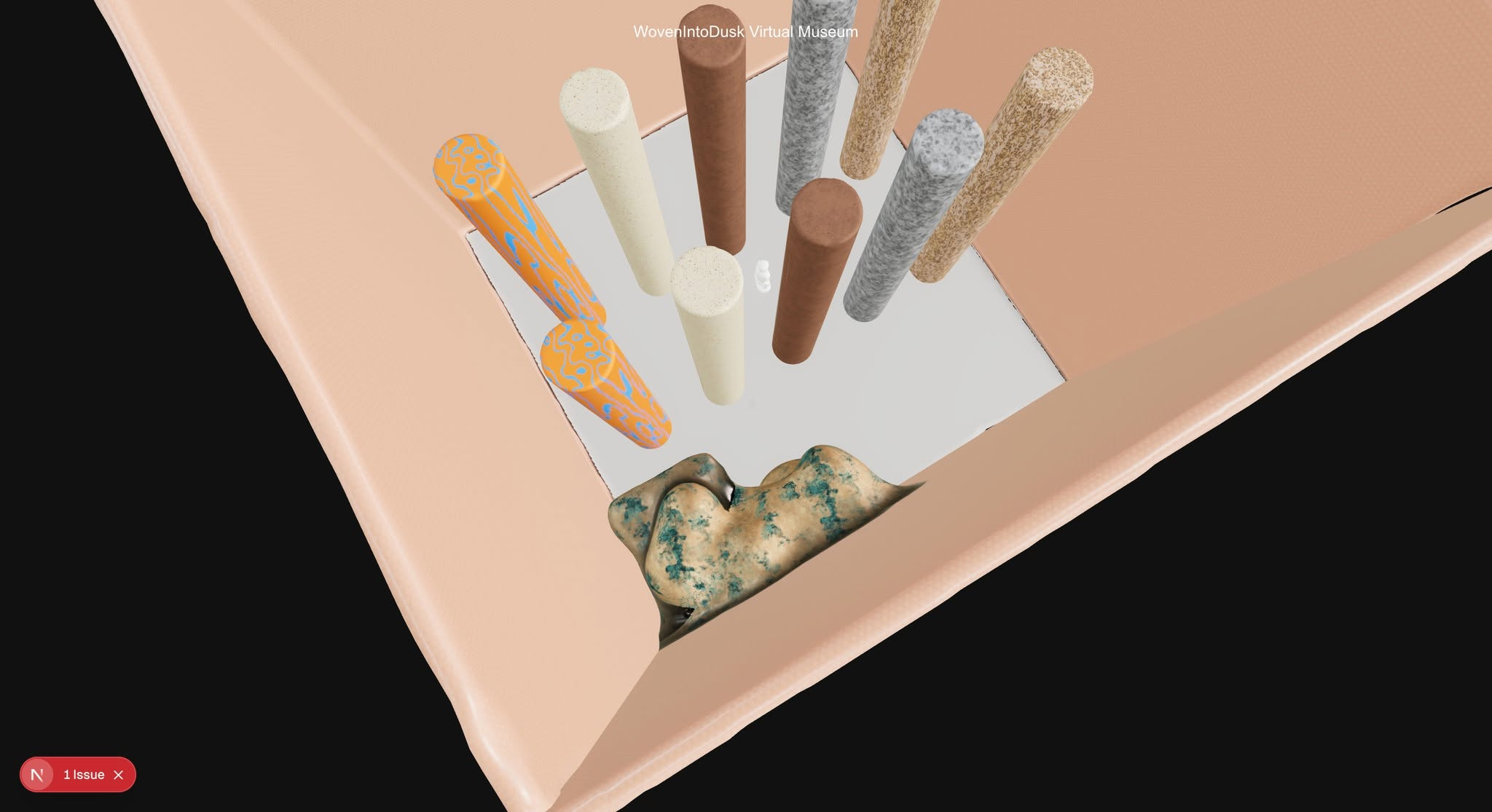
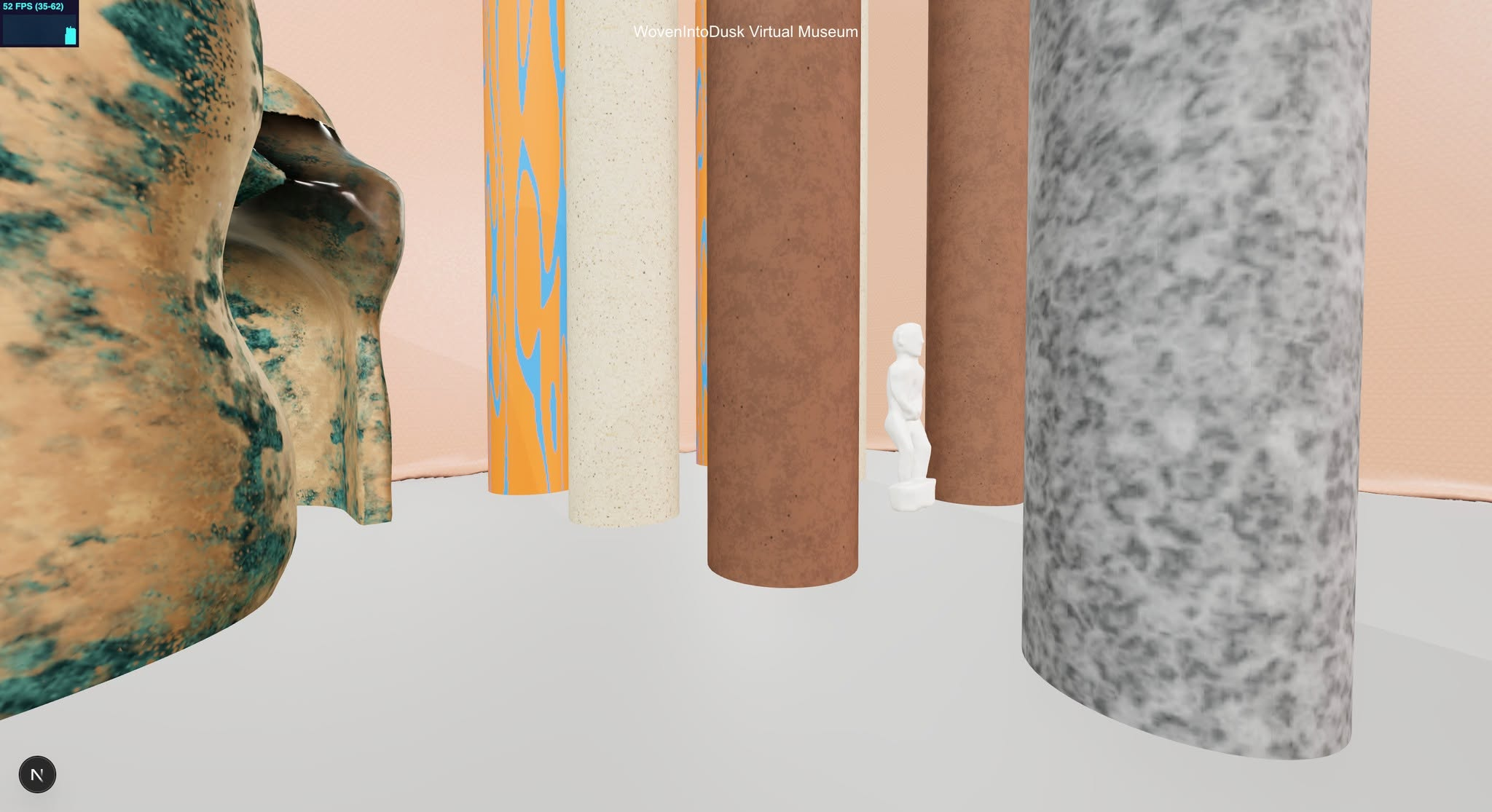
Woven Into Dusk is a 3D cultural and artistic space inspired by the indigenous peoples of Vietnam's Central Highlands, with a focus on Bahnar material culture. The project is being built as an explorable browser environment rather than a static exhibition page.
Visitors are meant to move through rooms devoted to silverwork, textiles, ceramics, and forest beliefs, encountering artifacts and spatial references as part of one continuous dusk-lit atmosphere.
Space design
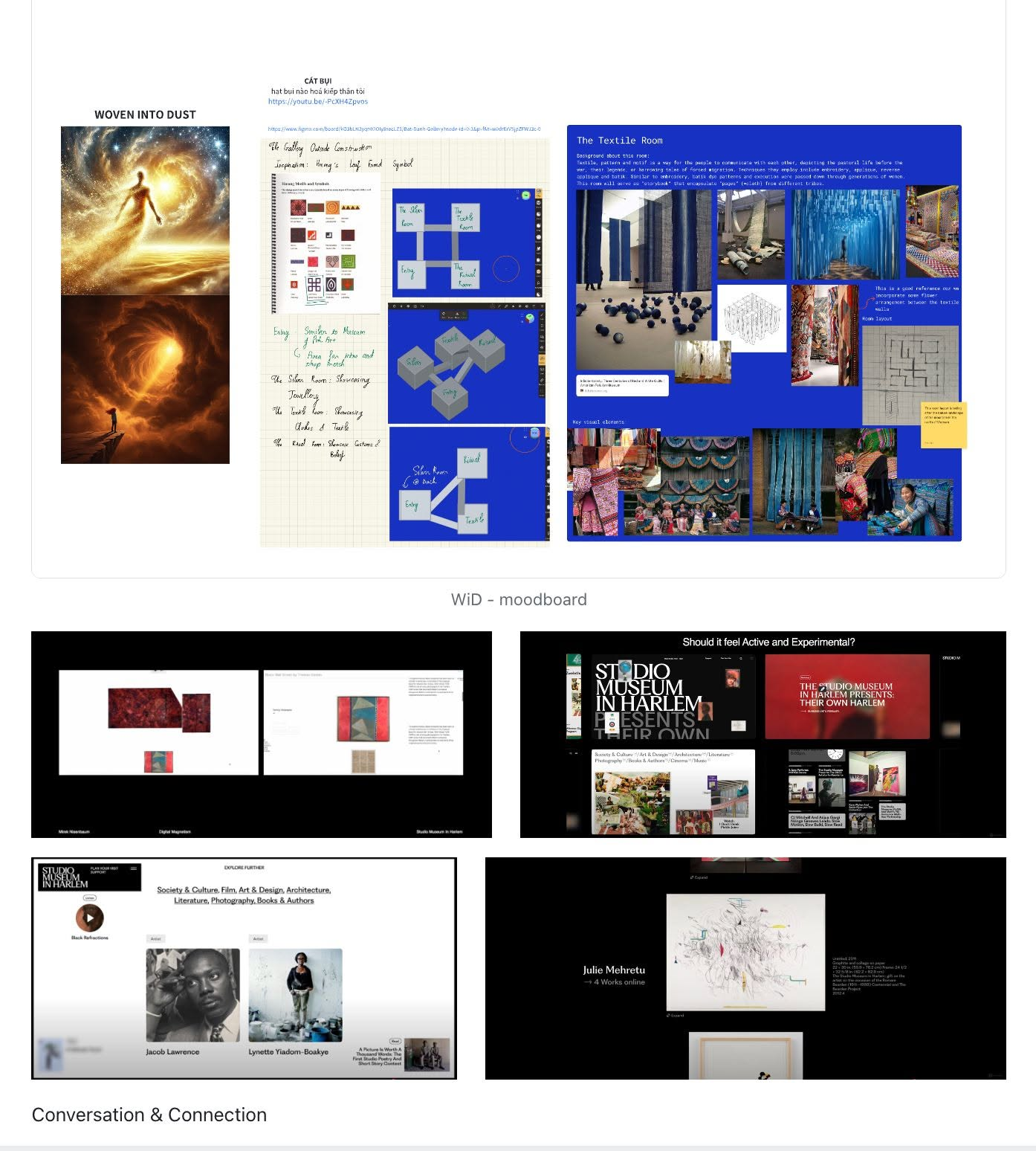
Early planning maps four main areas across the first floor: an Entry zone for orientation and a shop front, a Silver Room for jewelry, a Textile Room for woven cloth and pattern, and a Forest Room for ceramics and belief-related objects.
The Textile Room is conceived as a storybook of cloth, where embroidery, appliqué, and batik carry migration routes, pastoral life, and legend. Architectural references draw on leaf forms and communal building traditions from the region.
Development progress
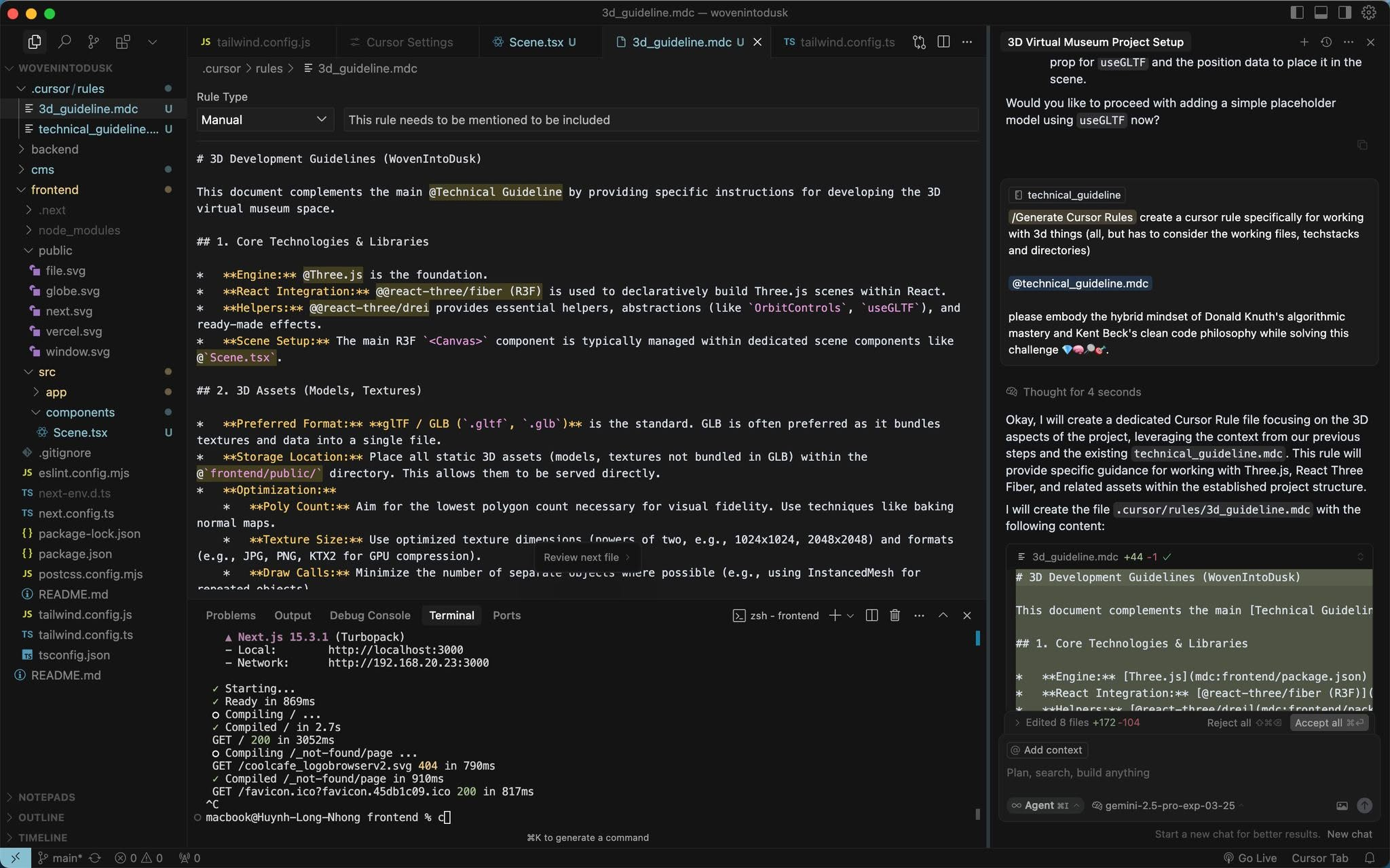
The project stack is now in place across backend (.NET), CMS (Strapi), and frontend (Next.js, TypeScript, Tailwind CSS, DaisyUI, and Three.js). Cursor rules for 3D assets and scene structure were established early so AI-assisted development could stay aligned with the project's rendering and performance constraints.
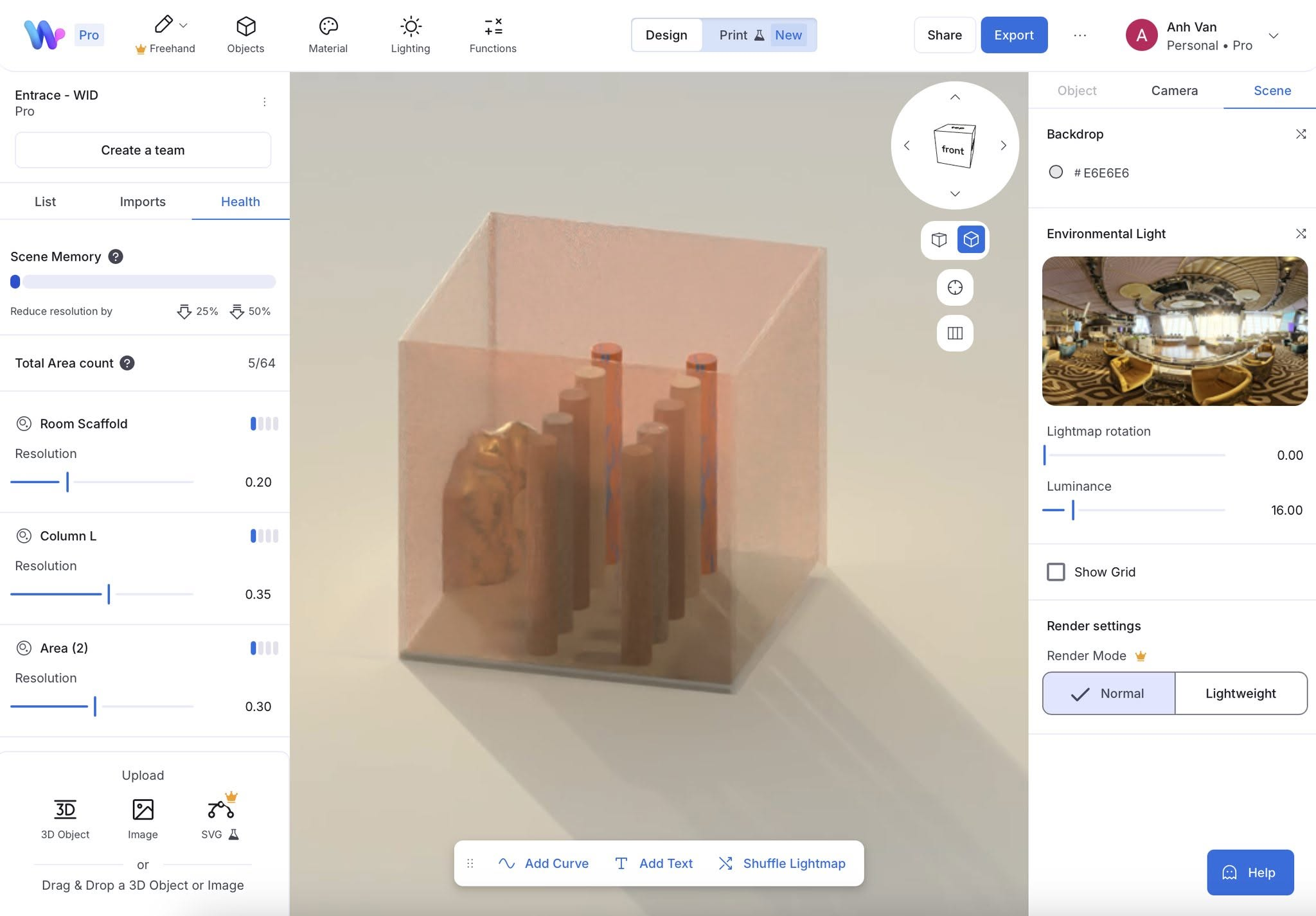
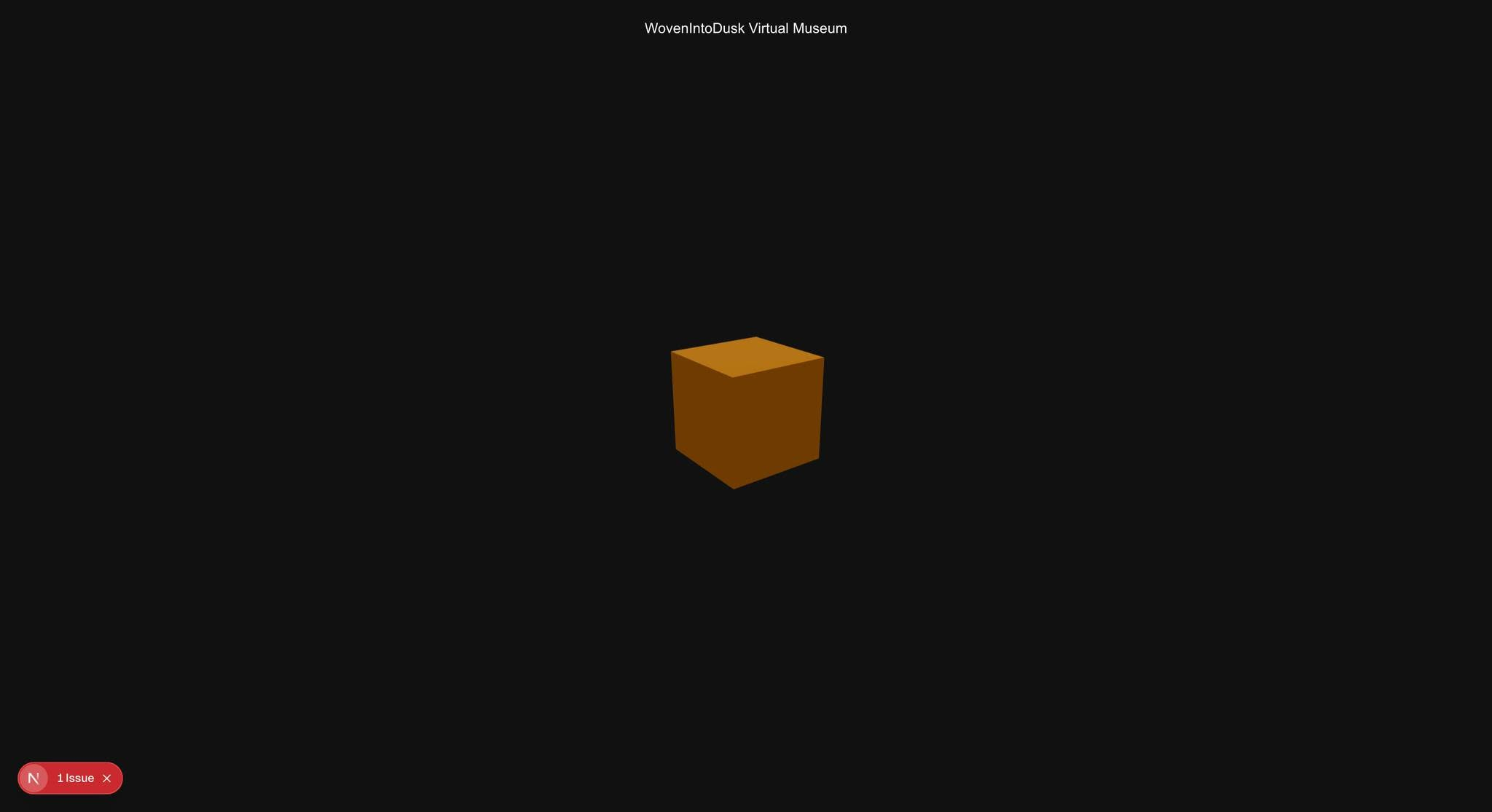
The first Three.js object rendered successfully after scene setup. The team has since built a first-floor 3D model and begun testing physical constraints, navigation, and interaction inside the virtual space.
Current goals include building out the CMS and database, refining both the 3D environment and the surrounding web interface, and integrating additional artifact samples into the museum rooms.
Project details
- Format
- Browser-based 3D cultural space
- Cultural focus
- Central Highlands heritage, with emphasis on Bahnar culture
- Role
- Collaborator
- Collaboration
- Bizarre Labs
- Frontend
- Next.js, TypeScript, Tailwind CSS, DaisyUI, Three.js
- CMS
- Strapi
- Backend
- .NET
- Image material
- Supplied by the Woven Into Dusk project team